Building a wooden barn yourself can save money. A basic four-stall barn costs about $10,000 if you do most of the work. This way, you can create a barn that fits your needs and budget. With careful planning, you can build a sturdy and functional barn without spending too much.
Choosing to do it yourself can save a lot of money. Professional barn builders charge between $60,000 to $80,000. With the right guide, you can build a barn that meets your needs and stays within your $10,000 budget.
Key Takeaways
- You can build a wooden barn from scratch for under $10,000 with proper planning and execution.
- A DIY approach can help you save money compared to hiring a contractor.
- Building a barn yourself requires significant time and effort, but it can be a rewarding experience.
- It’s essential to consider the cost of materials and labour when planning your wooden barn construction project.
- A low-cost barn building solution can be achieved with a DIY approach and careful planning.
- You can find prebuilt cabin shells for under $10,000, which can be a budget-friendly option for your wooden barn construction project.
- With a DIY guide, you can build a wooden barn that is both functional and sturdy, and stays within your budget of $10,000.
Essential Planning Before Starting Your Wooden Barn Project
Starting a budget-friendly barn project requires careful planning. You need to assess your property and local rules. This means figuring out your barn’s size and layout, setting a realistic timeline, and following local building codes.
Planning involves looking at the costs of building a wooden barn. A 24×36-foot pole barn might cost $5,000 to $10,000 in materials. Labour can cost between $20 to $50 an hour. Site preparation might add $3,000 to $6,0003. Don’t forget to budget for permits, which can vary based on location and project size.
To build an affordable barn, focus on these key points:
- Assessing your property and local regulations
- Determining barn size and layout
- Creating a realistic timeline
- Researching and comparing materials, labour rates, and contractors
By planning well, you can build a budget-friendly barn that meets your needs and follows local rules. Remember, a solid foundation, adequate support, and proper materials are crucial, as shown in the data.
With good planning and a focus on affordability, you can build a wooden barn without overspending. Follow these steps to create a successful and budget-friendly barn project.

| Factor | Considerations |
|---|---|
| Property Assessment | Evaluate your property’s size, shape, and zoning regulations |
| Barn Size and Layout | Determine the ideal size and layout for your barn based on your needs and budget |
| Timeline | Create a realistic timeline for your project, including construction and completion dates |
Complete Materials List and Budget Breakdown
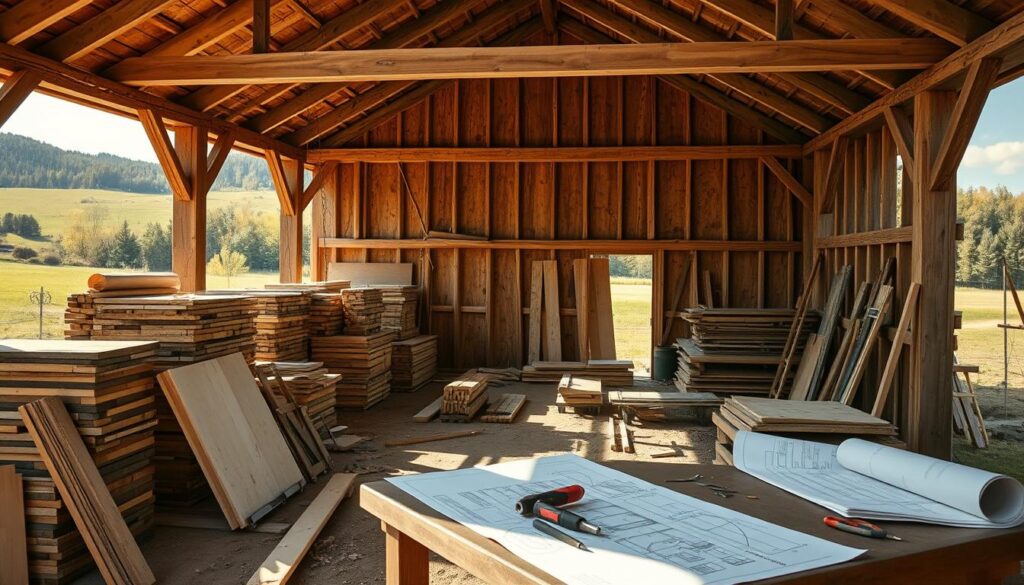
Building a wooden barn under $10k requires a detailed materials list and budget plan. The national average for building a barn is between $10,000 and $200,000. To save money, use affordable materials and follow a step-by-step guide. A tutorial on building a wooden barn under $10k can be very helpful.
The cost of your barn depends on the construction type. Pole barns cost between $20 and $60 per square foot. Stick-built barns can cost from $20 to $100 per square foot. It’s important to compare prices to find the best deal. Also, remember to include labour costs, which can be $5 to $10 per square foot for pole barns.
Here’s a rough estimate of costs for a wooden barn:
- Lumber: $3,000 – $5,000
- Roofing materials: $1,500 – $3,000
- Doors and windows: $1,000 – $2,000
- Foundation and site preparation: $2,000 – $4,000
These costs are just estimates and can change based on your barn’s size and type. Creating a detailed budget is crucial to staying on track. Use a step-by-step guide to plan and build your barn. For a wooden barn under $10k, consider DIY pole barn kits starting at $6,932.17.
Site Preparation and Foundation Work
Building a low-cost barn starts with site preparation and foundation work. These steps are key to a successful project. You want your barn to stand strong against the weather and last for many years.
First, check your property to find the best spot for your barn. Look at the drainage, soil, and how easy it is to get to. This helps you plan your project’s timeline and budget.
Site prep includes levelling the ground, choosing a foundation, and thinking about drainage. For example, preparing a site for a pole barn can cost between $500 and $1,000+. Foundation materials can start at about $1,000.
Here are some things to think about for site prep and foundation:
- Ground levelling: Make sure your site is even to avoid water damage and structural issues.
- Foundation types: Pick from concrete, gravel, or slab foundations based on your budget and soil.
- Drainage: Good drainage is key to preventing water damage and erosion around your barn.
By putting effort into site prep and foundation, your low-cost barn project will succeed. Your diy barn plans will become a reality.
Remember, a well-prepared site and a solid foundation are crucial for a lasting barn8.
| Site Preparation Costs | Foundation Costs |
|---|---|
| $500 to $1,000+ | approximately $1,000 |
DIY Guide: Building a Wooden Barn Under $10k – Framework Basics
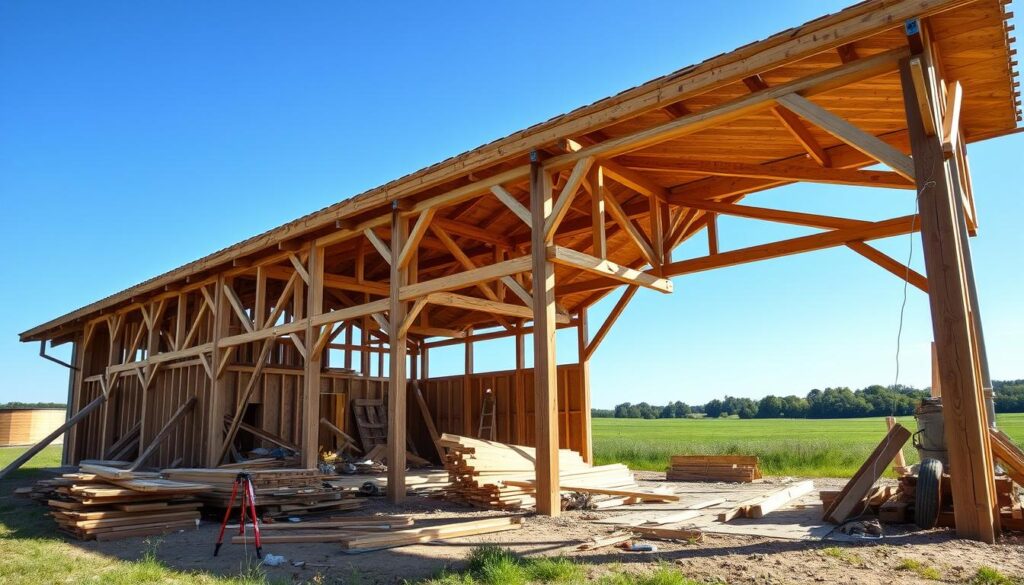
Building the framework of a wooden barn is key. It must be strong to hold the barn’s weight. The cost to build a barn varies by area, but it’s usually between $15 to $30 per square foot. Using recycled materials can make your barn cheaper.
Planning your framework well is vital for a good wooden barn construction project. Decide on your barn’s size and layout. Remember, lumber prices have changed a lot lately, from $3 to $5 per board foot. Look for cheaper ways to get lumber.
For a solid framework, use top-notch lumber and follow good building methods. The wood you pick affects your barn’s cost and how long it lasts. Pine is the most used wood, followed by cedar and oak. With these tips, you can make a strong and affordable barn framework.
Important things to think about when building a framework include:
- Using proper spacing and alignment techniques
- Selecting the right type of lumber for your project
- Ensuring that your framework is level and secure
By planning and building a solid framework, you’ll make a wooden barn construction project that fits your needs and budget.
Building a wooden barn can be a rewarding DIY project, but it requires careful planning and attention to detail. With the right materials and techniques, you can create a beautiful and functional barn that will last for years to come.
Wall Construction and Support Systems
Building a wooden barn requires strong walls and support systems. A budget-friendly barn project can be done by choosing affordable materials. For example, a board and batten system with 1×3 trim can cover 4×8 OSB sheets. OSB is the cheapest siding at $5 per sheet, while better materials cost $35 per sheet.
The framing process is key. It includes notching rafters to fit the walls and using metal hurricane straps for security. Adding laminated 2x4s for the ridgeboard also helps with support. Pole barn kits cost between $10,000 to $50,000, or $10–$30 per square foot for materials alone.
A guide-building-wooden-barn-under-10k project can use pre-fabricated kits to save money. But it needs skilled labour for assembly. The cost for a finished shed house ranges from $20,000 to $40,000, based on design and options. With these tips and affordable materials, you can build a strong and lasting wooden barn within your budget.
| Material | Cost per Square Foot |
|---|---|
| OSB | $5 |
| Higher Quality Materials | $35 |
| Pole Barn Kit | $10-$30 |
Roof Structure and Installation
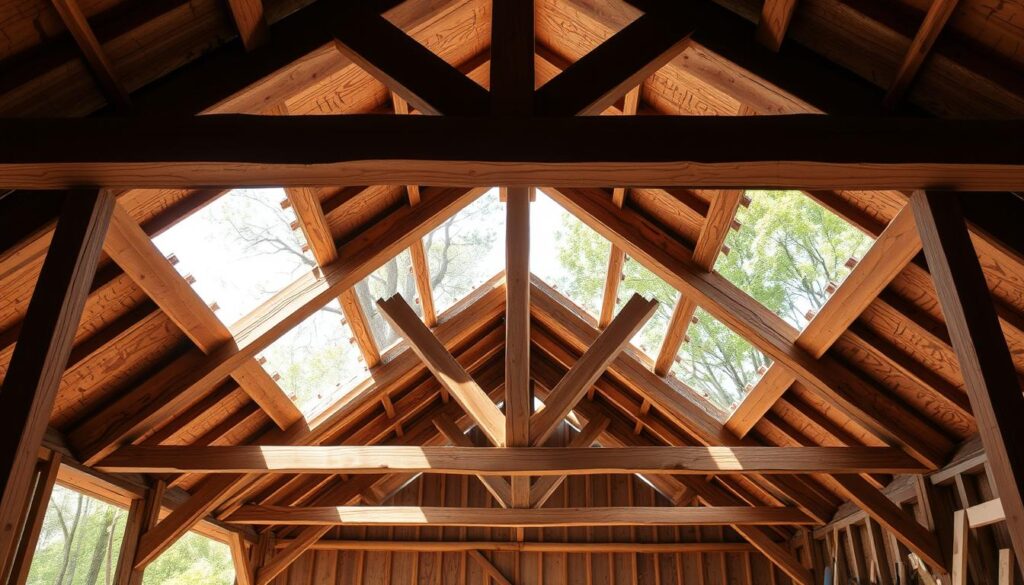
Building a wooden barn under $10k means focusing on the roof. A step-by-step barn building guide should talk about roofing materials like bitumen, tiles, and shingles. It’s important to know that a flat roof has a pitch of 0 to 10 degrees, and a low-pitched roof is between 10 to 20 degrees.
A wooden barn under $10k tutorial should highlight the need for good ventilation and insulation. Use plywood or sheet metal for this. Make sure the roof is sealed well to keep water out. Also, think about the cost, which can be between $10 to $50 per square foot.
Some important things to remember for the roof include:
- Roof pitch and material selection
- Proper ventilation and insulation
- Cost of materials and installation
By following a step-by-step barn building guide and keeping these points in mind, you can build a sturdy and weather-tight roof. Your wooden barn under $10k tutorial will be a success.
Installing Siding and External Features
Installing siding and external features is key in affordable barn construction. It boosts your barn’s look and protects it from the weather. For low-cost barn building, picking the right materials and methods is vital.
Choosing the right siding is important. Options include metal, vinyl, and wood. Metal siding is tough and lasts long. Wood siding looks natural but needs more care.
Here are some things to think about when installing siding and external features:
- Go for materials that last long and need little upkeep.
- Think about the cost of materials and work.
- Make sure siding and features are put on right to avoid damage and leaks.
Also, remember the foundation height and roof truss spacing for stability and to stop rot. By following these tips and picking the right materials, you can build a barn that’s both beautiful and practical. It will fit your needs and budget.
| Siding Material | Cost | Durability |
|---|---|---|
| Metal | Medium to High | High |
| Vinyl | Low to Medium | Medium |
| Wood | Medium to High | Medium |
By thinking about these points and picking the right materials, you can make a barn that looks great and works well. It will meet your needs and budget, helping you achieve your goals in affordable barn construction and low-cost barn building.
Interior Features and Organisation
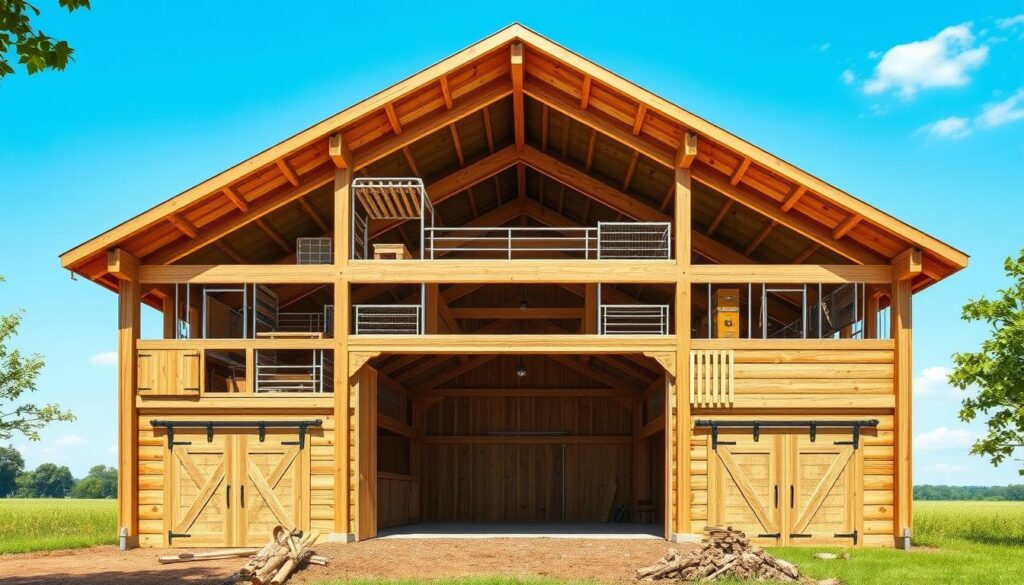
When designing your diy barn plans, think about key features. A budget-friendly barn can have stalls, tack rooms, and storage. These can be tailored to fit your needs. It’s crucial to consider how you’ll use the space and what’s essential for you.
Open floor plans can make your barn feel bigger and easier to navigate. Adding loft areas or upper levels can give you more storage or living space. For organisation, you can choose from shelving, cabinets, and hooks.
Here are some tips for organising your barn:
- Use vertical space: Install shelves, hooks, and other storage solutions that make the most of your barn’s vertical space.
- Label everything: Use labels and signs to keep track of what’s stored where, and to make it easier to find what you need.
- Keep it clean: Regularly clean and maintain your barn to prevent clutter and disorganisation from building up.
By using these tips and thinking about your needs, you can create a functional space. This space will meet your needs and stay within your budget. With planning and creativity, your barn can become a beautiful and useful space for years.
| Feature | Description |
|---|---|
| Stalls | Individual enclosures for horses or other animals |
| Tack rooms | Spaces for storing saddles, bridles, and other equipment |
| Storage areas | Spaces for storing hay, feed, and other supplies |
Essential Tools and Equipment Needed
Building a wooden barn under $10k requires the right tools and equipment. A step-by-step guide will show you why these are crucial. As you start your project, make sure you have these essential items.
A power tool set is a must for barn building. This includes a circular saw, drill, and impact driver. Also, don’t forget safety gear like hard hats, safety glasses, and steel-toed boots. Renting heavy equipment can save you money.
Here are the power tools you’ll need:
- Circular saw
- Drill
- Impact driver
- Reciprocating saw
Always follow safety rules and use the right tools for the job. With the right equipment, you’ll finish your barn project successfully.
Investing in the right tools and equipment makes your project efficient and satisfying. You’ll enjoy building your own wooden barn under $10k.
| Tool | Description |
|---|---|
| Circular saw | Used for cutting lumber |
| Drill | Used for drilling holes |
| Impact driver | Used for driving screws |
Maintenance and Protection Tips
Keeping your low-cost barn in good shape is key. Regular checks and fixes help it last longer. Affordable barns need care to avoid damage from weather and wear. A well-kept barn is safe for storage, animals, or other uses.
To shield your barn from the weather, use a weather-proofing coat on the outside. It stops water damage and slows down rot and decay. Also, clean up debris often to keep the barn healthy and pest-free.
Some important maintenance tasks include:
- Inspecting the roof for damaged or missing shingles
- Checking the foundation for signs of erosion or damage
- Applying a fresh coat of paint or stain to the exterior surfaces
By following these tips and keeping up with maintenance, your barn will stay in great shape. This ensures it remains a valuable and affordable option for years.
🔨 Ready to Build Your Dream Wooden Barn? Here’s Your Ultimate Shortcut!
Imagine transforming your woodworking vision into reality without endless frustration, expensive mistakes, or complicated guesswork. Ted’s Woodworking has cracked the code with 16,000 professional-grade barn and woodworking plans that make your project a breeze.
✓ Detailed, step-by-step blueprints
✓ Cutting and materials lists included
✓ Suitable for ALL skill levels
✓ Lifetime access to monthly updates
✓ 60-day money-back guarantee
Right now, you can get INSTANT ACCESS to the world’s largest woodworking plan collection for just $67 – that’s less than the cost of a single professional consultation!
👉 Start Your Barn Building Journey Today! 🏠
Don’t just dream about your perfect wooden barn. Build it with confidence, precision, and expert guidance. Click now – your woodworking revolution starts here!
Limited Time Offer: Save 78% – Only $67 (Normally $297)
Conclusion: Your Path to a Successful Barn Build
Building your own wooden barn can be very rewarding and affordable. By planning well, choosing the right materials, and following each step, you can build a beautiful barn for under $10,000.
Getting ready is crucial for a successful barn build. Check your property, decide on the right size and design, and plan a realistic timeline. This will help your project go smoothly. With the right tools and safety measures, you’re on your way to building your dream barn.
This guide will help you save a lot of money compared to building a house. Post-frame structures are also durable and easy to maintain, making them a wise choice for the future.
So, start your wooden barn project today. With good planning and hard work, you’ll soon enjoy your new barn. The journey is as important as the result, so enjoy the process and be proud of your effort. Good luck with your barn-building adventure!
FAQ
What are the essential planning steps before starting my wooden barn project?
Before starting, check your property and local rules. Decide on your barn’s size and layout. Make a timeline to keep your project smooth and stress-free.
What is the complete materials list and budget breakdown for building a wooden barn under $10,000?
The list includes lumber, roofing, doors, and windows. It helps you stay within your $10,000 budget.
What are the key considerations for site preparation and foundation work?
Site prep and foundation are key. You need to level the ground, choose a foundation type, and think about drainage. This ensures your barn is solid and stable.
How do I build the framework of my wooden barn?
The framework guide covers framing basics. It talks about lumber types, spacing, and alignment. It also shows how to build a strong frame.
What are the steps for wall construction and support systems?
The wall guide explains framing, bracing, and assembly. It helps make your barn strong and durable.
How do I install the roof structure and roofing materials?
The roof guide talks about roofing materials and ventilation. It shows how to install a durable, weather-tight roof.
What are the steps for installing siding and external features?
The siding guide covers material options and installation. It also talks about doors, windows, and weather protection.
How do I plan and organise the interior features of my wooden barn?
The interior guide discusses features like stalls and storage. It offers tips for space and efficiency.
What essential tools and equipment do I need to build a wooden barn?
The tools guide lists power tools and safety gear. It advises on renting or buying equipment for a safe, efficient project.
How do I maintain and protect my wooden barn in the long run?
The maintenance guide stresses regular upkeep and weather-proofing. It offers strategies for long-term preservation.