Did you know a simple DIY project can change any room? A wooden room divider can make a room multi-use, giving privacy and separation. A folding decorative wooden screen is both useful and stylish for your home.
Creating a DIY folding room divider is easy and beautiful. With basic materials and carpentry skills, you can make a stunning wooden folding screen. It will enhance the appearance of your living space.
By creating your own folding decorative wooden screen, you can tailor it to fit your needs and style. This project is great for adding elegance and function to your home.
Key Takeaways
- Create a functional and stylish room divider with a DIY folding wooden screen.
- Customise your wooden folding screen to fit your specific needs and decor.
- Enhance the aesthetic of your living space with a beautiful and functional DIY project.
- Use a folding decorative wooden screen to provide separation and privacy in any room.
- Build a stunning wooden folding screen with basic carpentry skills and simple materials.
The Versatility and Charm of Wooden Room Dividers
Wooden room dividers are great for adding privacy or style. They can split up living rooms, bedrooms, or guest rooms into different areas. This makes each space unique.
Practical Benefits of Portable Privacy Screens
Wooden room dividers are handy because they don’t need to be fixed in place. They can block out noise, hide views, and make open spaces feel more private.

Design Styles Throughout History
Room dividers have been around for ages. From Japan’s Shoji screens to Europe’s carved panels, they’ve seen many styles. These designs have shaped today’s room dividers, mixing old with new.
Modern Applications in Home Decor
Now, wooden room dividers are a key part of stylish interior decor. They fit many design styles, from simple to fancy. You can find one that matches your home perfectly.
Adding a wooden room divider can make your home both useful and beautiful.
Planning Your DIY Folding Wooden Screen Project

To make a folding wooden screen, start with a good plan. You’ll need to think about a few important things. This will help your project meet your needs and improve your home’s look.
Determining the Ideal Size and Panel Count
First, figure out the size of your screen. Think about the ceiling height and where it will go. Heights usually range from 60 to 72 inches, but you can adjust them.
The number of panels depends on the screen’s purpose and the area it will cover. For example, a big room might need more panels to divide it well.
Selecting a Design Style That Matches Your Decor
Choose a design that fits your home’s style. You might like modern or traditional looks. Your screen should match your decor well.
Think about the wood color, any decorations, and the overall look you want.
Measuring Your Space and Creating Templates
Getting the measurements right is key. Measure the area for your screen, noting any obstacles. Making a template helps you see how it will look and fit.
Budgeting for Your Project
Setting a budget is important. Figure out the cost of materials like wood, hinges, and decorations. A budget helps you make choices and stay within your means.
With good planning, your DIY folding wooden screen can be a useful and stylish addition to your home.
Essential Materials and Tools for Your Wooden Screen

To start your handcrafted folding screen project, you’ll need the right materials and tools. The quality of your materials will greatly affect your screen’s durability and look.
Wood Selection Guide: Hardwoods vs. Softwoods
Choosing the right wood is key to your wooden screen panels tutorial. Hardwoods like oak, maple, and cherry are durable and look luxurious. Softwoods like pine and cedar are more affordable but still beautiful. Think about the style and function you want when picking your wood.
Hardware Requirements: Hinges, Screws, and Supports
The hardware you pick will impact your screen’s stability and folding. Hinges are key for a smooth fold, while screws and supports keep the structure strong. Make sure your hardware fits your screen’s size and weight.
Essential Tools for the Project
You’ll need basic tools like a saw, drill, sandpaper, and measuring tape for your screen. A circular saw or hand saw cuts wood, and a drill makes screw holes.
Optional Speciality Tools for Advanced Designs
For complex designs, think about using special tools like a router for fancy edges or a jigsaw for curves. These tools can help you create unique designs for your handcrafted folding screen.
Preparing and Cutting the Wood for Your Screen Panels

The base of a stunning decorative screen divider starts with precise wood preparation and cutting. To make your wooden folding screen both useful and beautiful, you must prepare the wood panels carefully.
Measuring and Marking Your Panels with Precision
Getting the measurements right is key for panels to fit well together. Use a top-notch measuring tape and a sharp pencil to mark the wood. Make sure to double-check your measurements to avoid mistakes. Creating a template or using a jig can help keep your panels consistent.
Cutting Techniques for Different Panel Designs
The cutting method you pick depends on your panel design. For straight cuts, a table saw or circular saw works best. For curved cuts, a jigsaw or bandsaw is better. Always use a straight edge or guide for precise cuts and wear protective gear to stay safe.
Creating Decorative Elements: Cutouts and Patterns
To make your wooden folding screen more interesting, add decorative cutouts or patterns. Use a jigsaw or coping saw for detailed designs. You can also use laser-cut or CNC-cut elements for complex patterns. Sand the edges to make them smooth.
Sanding and Preparing the Wood Surfaces
After cutting, sanding is crucial to get the wood ready for finishing. Begin with coarse-grit sandpaper and move to finer grits for a smooth finish. Sanding not only looks better but also helps your stain or paint job look professional.
Building the Individual Panels of Your Folding Decorative Wooden Screen

To make a beautiful and sturdy folding decorative wooden screen, focus on building strong panels. This process includes several important steps. These steps make sure your screen is both useful and looks great.
Frame Construction Methods for Stability
The frame of each panel is key to your screen’s stability. You can use methods like mortise and tenon or dowel joints. Using high-quality wood and precise joinery techniques makes your screen last longer.
Panel Insert Options: Solid Wood, Lattice, or Mixed Media
After building the frame, choose what to put inside. You can pick solid wood, lattice, or mixed media. Lattice panels add beauty and let air through. Solid wood panels offer more privacy.
Joinery Techniques for Durable Connections
The joinery method you pick affects how long your screen lasts. Dovetailing, mortise and tenon, or dowels make strong connections. Properly executed joinery keeps your screen stable over time.
Assembly Process Step-by-Step
Assembling the panels takes a few steps:
- Prepare the frame parts according to your design.
- Assemble the frame with your chosen joinery method.
- Put the panel material into the frame.
- Secure the panel with the right fasteners.
- Do this for each panel you need for your screen.
| Panel Component | Material Options | Joinery Techniques |
|---|---|---|
| Frame | Solid Wood, Engineered Wood | Mortise and Tenon, Dowel Joints |
| Panel Inserts | Solid Wood, Lattice, Mixed Media | Glue, Nails, Dovetailing |
| Hinges and Hardware | Metal Hinges, Screws | Flush Mounting, Screw Installation |
By following these steps and using the right materials and techniques, you can make a beautiful and useful folding decorative wooden screen. It will enhance your home’s look.
Installing the Hinges for a Proper Folding Mechanism
To make your DIY folding wooden screen work well, installing hinges correctly is crucial. Hinges let your screen fold and unfold easily. They are a key part of your project.
Types of Hinges Suitable for Wooden Screens
There are many hinges to pick from for your wooden screen. Continuous piano hinges are a top choice because they are easy to use and align well. They offer a smooth, continuous motion perfect for foldable room dividers.
- Piano hinges for continuous folding action
- Butt hinges for a more traditional look
- Soft-close hinges for a quieter operation
Proper Hinge Placement and Spacing
It’s important to place and space the hinges correctly for your wooden screen to work well. Hinges should go along the edges of the panels. They should be spaced evenly to spread the weight of the screen.
- Measure the length of your panels to figure out hinge placement.
- Mark the hinge spots on both panels to keep them aligned.
- Drill pilot holes before screwing in the hinges.
Installation Techniques for Flush Mounting
Flush mounting means installing hinges so they’re hidden in the wood, making the surface flat. This method needs careful measuring and precise cutting for a smooth finish.
Tip: Use a chisel to carefully remove wood and make a recess for the hinge.
Testing and Adjusting the Folding Action
After installing hinges, test how your screen folds. Look for any blocks or misalignments that could stop the hinges from moving smoothly.
- Test the screen by folding and unfolding it several times.
- Adjust the hinges as needed for a smooth motion.
By following these steps, you can make sure your foldable room divider works well and looks great in your home.
Finishing Techniques for Your Wooden Privacy Screen
After putting together your portable privacy screen, it’s time to add a finish that fits your stylish interior decor. The finishing step is key. It makes your wooden screen look better and keeps it safe from harm.
Staining Options to Enhance Wood Grain
Staining is a great way to show off the wood’s natural beauty. You can pick from many stain colors and types, like oil-based or water-based. Think about your room’s color when picking a stain to match your stylish interior decor.
Painting and Decorative Techniques
For a personal touch, paint your wooden screen. Start with a primer for better paint adhesion and coverage. You can also add stencils or decoupage for a unique look on your portable privacy screen.
Applying Protective Coatings for Durability
To keep your screen safe from damage, use a protective coating. Polyurethane and varnish are good choices for a strong finish. Apply thin coats, letting each dry as the maker says.
Drying and Curing Times Between Coats
It’s important to wait the right amount of time between coats for a top-notch finish. Usually, wait at least 24 hours, but it depends on the product and where you are.
Choosing and applying the right finish can make your portable privacy screen look great and last longer. It will stay a stylish and useful part of your home.
Customisation Ideas for Your Portable Wooden Screen
Make your portable wooden screen truly unique with these ideas. It’s a versatile home accessory that can match your style and improve your home.
Adding Fabric, Paper, or Glass Inserts
Adding fabric, paper, or glass can make your screen elegant. These materials let you create designs from simple to complex.
- Fabric inserts add a soft, warm feel.
- Paper inserts give a delicate, lace-like look.
- Glass inserts make your screen sleek and sophisticated.
Incorporating Decorative Hardware and Embellishments
Decorative hardware and embellishments can make your screen more beautiful. Think about adding:
- Ornate hinges that match your screen’s style.
- Unique knobs or handles for a special touch.
- Intricate carvings or engravings for extra interest.
Creating Multi-functional Screens with Shelving
Adding shelving units can make your screen more useful. It turns your divider into a place for books, decorations, or kitchenware.
Seasonal Decoration Options
Change your screen with the seasons to keep your decor fresh. You can:
- Put on seasonal fabric or paper inserts.
- Add decorations like pinecones, holly, or flowers.
- Use your screen as a backdrop for seasonal displays.
With these ideas, your portable wooden screen becomes a unique and useful piece that fits your home decor.
| Customization Idea | Description | Benefits |
|---|---|---|
| Adding Inserts | Maximises functionality, provides storage | Enhances aesthetic appeal, adds texture and visual interest |
| Decorative Hardware | Ornate hinges, knobs, or handles for a unique look | Adds sophistication, complements screen design |
| Shelving Units | Multi-functional storage solutions | Maximizes functionality, provides storage |
| Seasonal Decor | Update your screen seasonally with themed inserts or decorations | Keeps decor fresh, adds seasonal charm |
🔨 Want to Build This Folding Wooden Screen Without Guesswork?
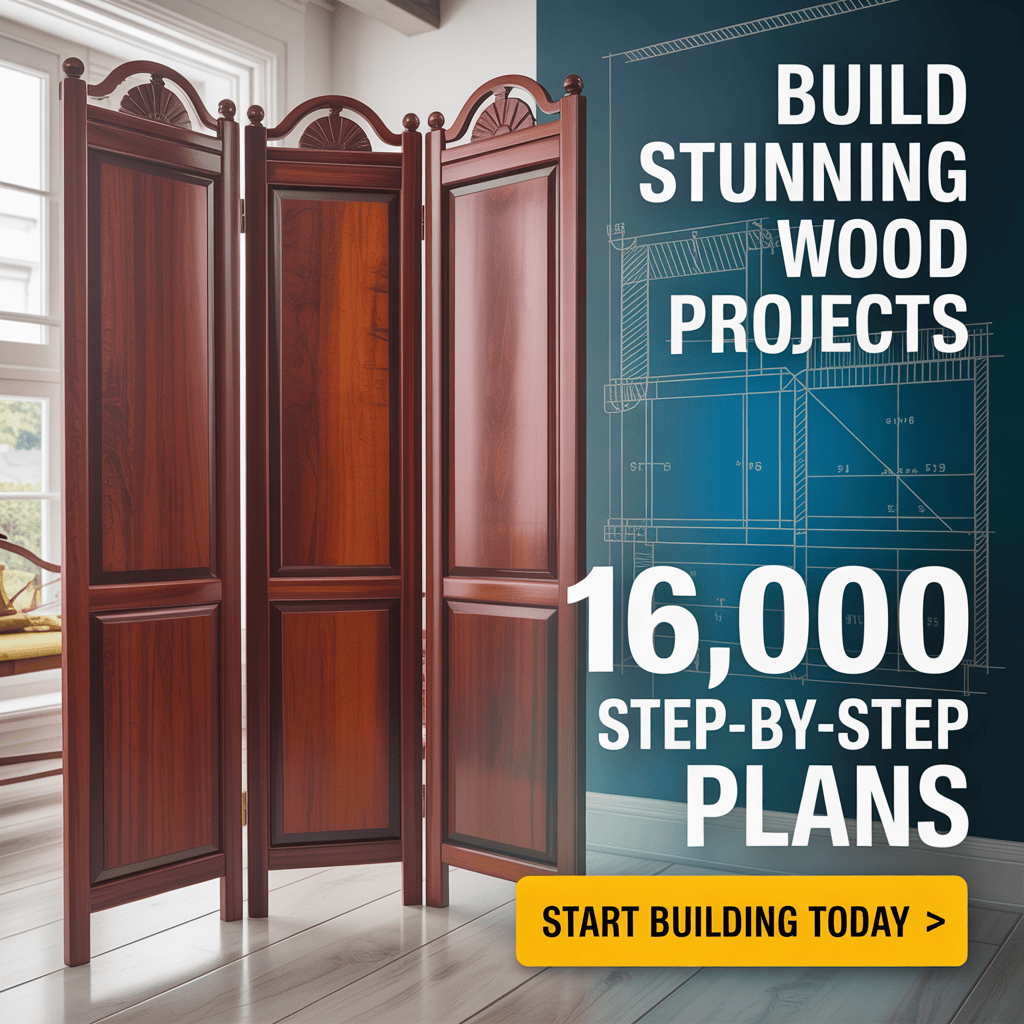
If you loved this Folding Decorative Wooden Screen project, imagine having step-by-step blueprints not just for this—but for 16,000+ woodworking projects you can build confidently, even as a beginner.
✅ Why Smart Woodworkers Choose Ted Woodworking
- 16,000 Done-For-You Woodworking Plans with exact measurements
- Beginner-friendly, step-by-step instructions (no confusion, no missing steps)
- Detailed diagrams, schematics & multiple-angle views
- Exact cutting & material lists to save time and money
- Lifetime access + FREE monthly new plans (no recurring fees)
- Perfect for DIY screens, furniture, outdoor projects & custom builds
👉 Build faster. Build smarter. Build like a pro.
🔥 Limited-Time Offer – One-Time Fee
Click below to get instant lifetime access to the world’s largest woodworking plan library and turn your ideas into professional-quality projects—starting today.
👉 Get Instant Access to Ted Woodworking Plans Now
👉 Build Any Wood Project With Confidence
(Risk-free with a 60-day money-back guarantee)
Conclusion: Enjoying Your Handcrafted Folding Wooden Screen
Now that you’ve made your handcrafted folding screen, it’s time to enjoy it. A folding decorative wooden screen can make any room look better. It adds a special touch of handmade beauty.
Put your screen in a cosy spot, like a living room or bedroom. It can make a cosy corner or divide a big space. You can also use it to decorate a hallway or entryway.
Looking at your work, remember it’s not just useful. It shows your creativity and DIY skills. Your handcrafted folding screen is a piece of your home that reflects you.
Try different places and ways to show off your screen. With your handcrafted folding screen, you can make any room look elegant and unique. It’s a special and useful piece for your home.
FAQ
What type of wood is best for building a folding decorative wooden screen?
The best wood for your screen depends on what you like and how durable it needs to be. Hardwoods like oak, maple, and cherry are strong and look great. Softwoods like pine offer a rustic feel.
How do I determine the ideal size and panel count for my wooden screen?
First, measure the space for your screen and think about the room’s layout. A bigger screen with more panels is flexible but harder to build and move.
What kind of hinges should I use for my folding wooden screen?
Choose hinges that are strong and let the screen fold smoothly. Piano hinges or continuous hinges work well because they’re durable and connect panels well.
Can I customise my wooden screen with different materials, such as fabric or glass inserts?
Yes, you can add different materials to make your screen unique. Use fabric, glass, or metal inserts to add interest and show off your style.
How do I ensure my wooden screen is stable and secure?
Use good joinery for the panels and install hinges correctly. Adding weights or anchors to the base helps keep it from tipping.
What kind of finish should I apply to my wooden screen?
The finish depends on your wood and what you want it to look like. You can stain, paint, or use a clear coat to protect and highlight the wood.
How can I make my wooden screen more multi-functional?
Add features like shelves or storage to make it more useful. You can also add decorations like LED lights or carvings to make it stand out.