Did you know a big space can make your rabbits healthier and happier? A spacious bunny hutch lets them move and play. It also keeps them safe from predators and bad weather.
Creating a rabbit mansion for multiple bunnies needs careful planning. A big, airy hutch with lots of room is key to your rabbits’ happiness. We’ll show you how to make a safe and cosy home for them.
Key Takeaways
- Understand the importance of a spacious environment for rabbits.
- Learn the key elements of designing a safe and comfortable rabbit hutch.
- Discover the benefits of a well-ventilated and predator-protected hutch.
- Get an overview of the steps involved in building a rabbit mansion.
- Find out how to ensure your rabbits have ample space to move and exercise.
Why You Need a Large Rabbit House for Multiple Rabbits
A big rabbit enclosure is not just a luxury; it’s a necessity for your rabbits’ health and happiness. When you have multiple rabbits, they need enough space to live comfortably. A spacious multi-rabbit hutch lets them engage in natural behaviours, exercise, and interact without stress.
Health and Behavioural Benefits of Spacious Housing
Providing a large rabbit house has many health and behavioural benefits. Some of these benefits include:
- Reduced Stress: A spacious environment reduces competition and stress among rabbits, leading to a more harmonious living situation.
- Increased Exercise: With more space, rabbits can move around freely, exercise, and engage in natural behaviours like hopping and stretching.
- Better Health: Ample space allows for better ventilation and reduces the risk of health issues related to poor sanitation and overcrowding.
Rabbit care experts say, “Rabbits are active animals that need room to move and exercise to stay healthy and happy.” A big rabbit enclosure is a step towards creating a healthy environment for your pets.
“Rabbits are social creatures that thrive in environments where they can interact and move freely.”
Rabbit Care Specialist
Common Problems with Undersized Rabbit Enclosures
Undersized rabbit enclosures can lead to a range of problems, including:
- Stress and aggression among rabbits due to competition for space and resources.
- Health issues such as obesity from a lack of exercise and related conditions.
- Behavioural problems like excessive chewing or digging due to boredom or frustration.
Investing in a rabbit colony housing that is spacious enough for your rabbits to live comfortably is essential. By understanding your rabbits’ needs and providing a suitable environment, you can ensure they lead happy and healthy lives.
Planning Your Multi-Rabbit Hutch Design
Building a rabbit shed for multiple pets requires careful planning. First, decide how many rabbits you’ll house. This helps determine the hutch’s size and type.

Choosing Between Single-Level and Multi-Story Designs
Decide between a single-level or multi-story rabbit hutch. A single-level design is simpler to build and clean. It offers a straightforward layout for your rabbits.
A multi-story design, on the other hand, can save space. It provides multiple levels for your rabbits to explore and play.
Think about your rabbits’ age and energy when choosing. Younger or more energetic rabbits might enjoy a multi-story design with ramps. This offers ample opportunities for exercise and play. Older or less mobile rabbits might prefer a single-level design to avoid climbing strain.
Indoor vs. Outdoor Rabbit House Considerations
Decide if you’ll house your rabbits indoors or outdoors. An indoor house protects from extreme weather and predators. An outdoor hutch offers natural light and fresh air. Think about your climate and your rabbits’ needs.
If you choose outdoor housing, make sure the hutch is well-ventilated and protected from the elements. For indoor housing, consider your home’s space and how to fit the rabbit house without disrupting your living area.
Climate and Weather Protection Features
It’s crucial to protect your rabbits from the weather, whether indoors or outdoors. For outdoor hutches, use weatherproof roofing and insulation. This keeps them warm in winter and cool in summer.
In areas with heavy rainfall, ensure your hutch has good drainage. This prevents water buildup inside. For intense sunlight, add shading to protect your rabbits from heat stress.
Essential Tools and Materials for Your Rabbit Mansion
To build a large rabbit cage, picking the right tools and materials is key. You need to think about what makes a safe and spacious enclosure.
Wood Selection and Treatment Options
Choosing the right wood for your rabbit hutch is important. Hardwoods like cedar and pine are good choices because they resist rot and insects well. But avoid pressure-treated wood because it can harm rabbits.
- Cedar: Known for its aromatic properties that repel insects.
- Pine: A cost-effective option that still offers good durability.
- Aspen: Another safe option for rabbits, as it’s non-toxic.
Make sure the wood is treated to last outside. Using a non-toxic sealant helps protect it from the weather.
Hardware and Fasteners You’ll Need
You’ll need different hardware and fasteners to build your hutch. Galvanised screws and nails are best because they don’t rust and keep the structure strong.
- Galvanised screws for assembling the frame.
- Nails for attaching wire mesh.
- Hinges and latches for doors.
Roofing and Weatherproofing Materials

A waterproof roof is key to keeping your rabbits dry. Asphalt shingles or corrugated metal roofing are good for keeping out the weather.
- Asphalt shingles for a traditional look.
- Corrugated metal for enhanced durability.
Make sure the roof is sealed well to avoid leaks. Use a waterproof sealant around vents and edges to keep them dry.
Wire Mesh and Flooring Components
Wire mesh is vital for air and safety from predators. Choose a mesh with small openings to keep rabbits safe.
- Wire mesh with 1-inch openings or smaller.
- Plywood or solid wood for flooring.
- A layer of safe bedding material.
For flooring, use wire mesh with a solid bottom to stop digging escape attempts.
Calculating the Right Size for Your Large Rabbit House: Multiple Rabbits
Building a large rabbit house for multiple rabbits is key to their health and happiness. A big house lets your rabbits move freely, which reduces stress and boosts their well-being.
Space Requirements Per Rabbit
Each rabbit needs about four times its own size in space. For average rabbits, this means 4-5 square feet per animal. So, three rabbits need at least 12-15 square feet of space.
Recommended Dimensions for 2-4 Rabbits
A good size for 2-4 rabbits is a house that’s 6 feet by 4 feet (24 square feet). This size lets your rabbits stretch, move, and behave naturally. You can adjust the size based on your rabbits’ breed and size.
Scaling Up for Larger Rabbit Colonies
For a bigger rabbit colony, you’ll need a bigger house. Add 4-5 square feet for each rabbit over four. For example, six rabbits might need a 36-40 square feet house.
Here’s a rough guide for the total living area based on the number of rabbits:
- 2 rabbits: 8-10 square feet
- 3 rabbits: 12-15 square feet
- 4 rabbits: 16-20 square feet
- 5 rabbits: 20-25 square feet
- 6 rabbits: 24-30 square feet
Remember, these are just guidelines. Your rabbits’ specific needs might differ. Always think about their size, age, and breed when choosing the right size for your rabbit house.
Step 1: Building the Foundation and Base Frame
Building a strong base frame is the first step for a safe rabbit home. This step is key to a lasting rabbit house.
Preparing the Ground and Levelling
Start by preparing the ground. Pick a flat spot or level the ground for stability. Use a spirit level and shovel to get it perfectly level. This step stops structural problems in your rabbit hutch.

Constructing the Base Frame
The base frame is the foundation of your rabbit house. Use untreated 2×4 and 4×4 lumber for framing. The 4×4 posts support the hutch, keeping it safe from pests.
Cutting the Floor Joists
Cut 2×4 lumber into lengths for the floor joists. They should be 16 inches apart. Make sure your measurements are right to avoid weak spots in your bunny hutch.
Assembling the Rectangular Base
Put the floor joists together into a rectangular frame with 3-inch galvanized lag screws. Check that the corners are square and the frame is strong. This base is the foundation of your large rabbit house.
Installing the Flooring
After building the base frame, install the flooring. You can choose solid wood or protective wire mesh.
Solid Wood Flooring Installation
For solid wood flooring, use pressure-treated wood or cedar. Cut the wood to fit the base frame without gaps. Use 2-inch galvanised nails to secure it.
Adding Protective Wire Mesh Sections
For extra protection against predators, add wire mesh sections. Use heavy-duty wire mesh with 1-inch openings. Attach it to the base frame with staples or wire clips. This adds security for your rabbits.
Here’s a quick summary of building your large rabbit house’s foundation and base frame:
- Prepare the ground and level the area.
- Construct the base frame using untreated 2×4 and 4×4 lumber.
- Cut and assemble the floor joists into a rectangular base.
- Install solid wood flooring or add protective wire mesh sections.

Step 2: Constructing the Wall Frames and Structure
Building the wall frames is key to making a strong bunny habitat for many rabbits. This step includes important parts to make sure your enclosure is safe and comfy for your rabbits.
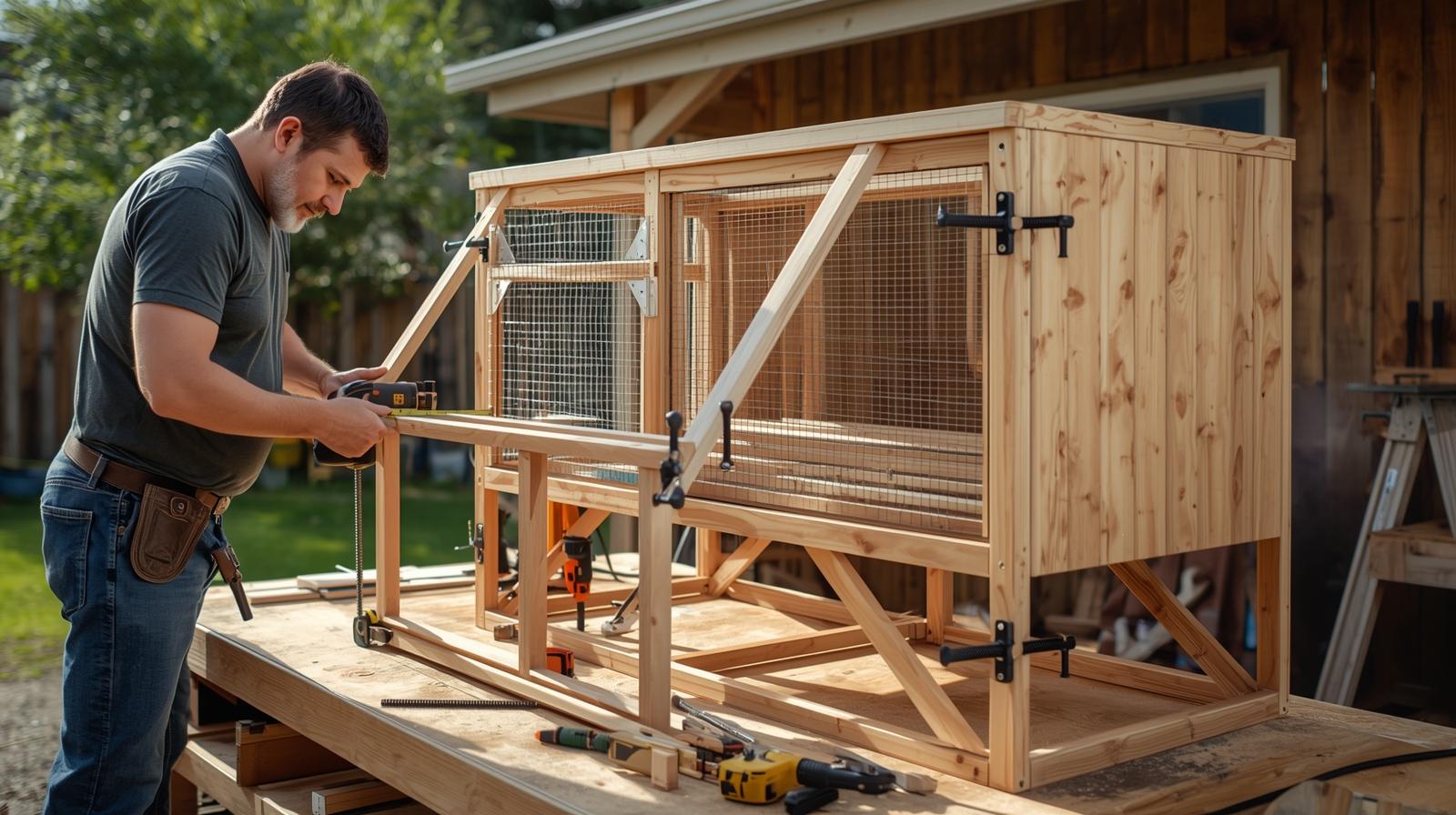
Building the Wall Frames
To build the wall frames, cut the vertical studs and horizontal supports as per your design. It’s vital to measure accurately so the frames fit well together.
Cutting Vertical Studs and Horizontal Supports
Use a saw to cut the studs and supports cleanly through the wood for your multi-rabbit hutch. Accuracy is key to avoiding gaps or weak spots in the structure.
Assembling Each Wall Section
After cutting all the pieces, start putting together each wall section. Use screws or nails to hold the pieces together. Screws are generally recommended for a stronger finish and easier work.
Attaching Walls to the Base
Once the wall frames are built, attach them to the base of your rabbit enclosure. Make sure the walls align with the base for a strong structure.
Secure the walls to the base with sturdy screws. This will give your bunny habitat a solid base and help it stand up to different weather conditions.
Installing Wire Mesh Panels for Ventilation
Wire mesh panels are crucial for good ventilation in the rabbit enclosure. They also keep predators out while letting your rabbits see outside.
To put in wire mesh panels, cut them to the right size and attach them to the wall frames with screws, nails, or staples. Using screws is advisable for a secure attachment.
| Material | Purpose | Recommended Fasteners |
|---|---|---|
| Wire Mesh | Ventilation and Security | Screws |
| Wooden Frames | Structural Support | Screws or Nails |
| Horizontal Supports | Frame Stability | Screws |
Creating Separate Compartments and Dividers
To keep multiple rabbits happy, it’s important to make separate areas in the hutch. Use wooden dividers or wire mesh partitions to divide the spaces.
Make sure each area has enough room for the rabbits to move around. The dividers should be strong and well attached to the wall frames.
Step 3: Adding the Roof Structure and Weatherproofing
Creating a strong roof is key to keeping your rabbits safe from the weather. A good roof protects your spacious bunny hutch from rain and sun. It also helps with ventilation and maintains a warm or cool interior.
Building the Roof Frame
The roof frame is the core of your DIY rabbit hutch‘s weatherproofing. You need to make it sloped. This lets snow slide off and water drain.
Creating the Sloped Roof Design
A sloped roof stops water from gathering. This keeps your large rabbit cage dry. To do this, you’ll need to:
- Cut the roof rafters at an angle to create the slope.
- Use a template to ensure consistency across all rafters.
- Assemble the rafters with a ridge beam at the top.
Securing Roof Rafters
It’s important to secure the roof rafters well. This keeps your rabbit hutch diy project strong. Use:
- Galvanised nails or screws to prevent rust.
- Additional support beams for larger roofs.
- A level to ensure the rafters are properly aligned.
Installing Roofing Materials
After securing the roof frame, you can put on the roofing materials. You can choose from:
| Material | Durability | Cost |
|---|---|---|
| Asphalt Shingles | High | Moderate |
| Metal Roofing | Very High | High |
| Corrugated Plastic | Moderate | Low |
Applying Weather-Resistant Sealants and Coatings
To protect your spacious bunny hutch more, use weather-resistant sealants. Also, think about a waterproof coating for the roof.
Adding Ventilation Gaps and Overhangs
Good ventilation is crucial for a healthy rabbit cage. Make sure there are enough ventilation gaps. Also, add overhangs to keep walls dry.
By following these steps, you can make a strong and weatherproof roof. This ensures a safe and cosy home for your rabbits.
Step 4: Installing Doors, Ramps, and Access Points
Now, it’s time to add doors, ramps, and access points to your rabbit house. This step is key to your rabbits’ safety and ease of movement.
Building and Hanging Main Access Doors
Choose strong materials for your rabbit house doors. They should be big for easy cleaning. Make sure the hinges can hold the door’s weight and attach them well.
To hang the doors right, follow these steps:
- Measure the door frame carefully for a good fit.
- Attach hinges to the door and frame, aligning them correctly.
- Check that the doors open and close smoothly.
Creating Rabbit-Sized Entry and Exit Points
Rabbits need their own doors to move around. These should keep them safe from escape and predators. Choose a size that fits your rabbits, about 6-8 inches.
Consider adding:
- Small doors or flaps for night or when you’re away.
- Tunnels or bridges to connect areas.
Constructing Ramps Between Levels
Ramps are vital for rabbits to move between levels. They should be gentle and textured to prevent slipping. Choose materials that are easy to clean and last long.
Remember:
- The ramp should be wide enough for your rabbits.
- Add railings to keep rabbits from falling.
- Make sure the ramp is well attached to both levels.
Installing Secure Latches and Locks
Security is crucial in a rabbit house. Put on strong latches and locks to keep rabbits safe. Use outside-operated locks for easier daily routines.
When picking latches and locks, think about:
- How well do they last in the weather?
- How easy they are for you to use, but hard for rabbits.
- The right size and strength for your doors.
By following these tips, your rabbit house will be safe, spacious, and easy for your rabbits to get around.
Interior Setup and Essential Features for Multi-Rabbit Living
Setting up a cosy and fun space is key to your rabbit’s home. A good design makes life better for your rabbits and easier for you.
Creating Hiding Spots and Private Areas
Rabbits love to hide. You can make hiding spots with cardboard boxes or tunnels. These spots help them feel safe and calm.
- Use sturdy cardboard boxes with rabbit-sized holes cut out.
- Place tunnels or small enclosures in quiet areas.
Installing Feeding and Water Stations
Good feeding and water systems are vital for your rabbits’ health. Make sure the stations are clean, easy to reach, and waste-free.
- Use heavy ceramic dishes that won’t tip over easily.
- Install water bottles or bowls that are cleaned daily.
Setting Up Litter Box Areas
Rabbits are clean animals and like to use a certain spot for their litter. A litter box area keeps your rabbit house tidy.
- Place a litter box in a corner of the hutch.
- Use a safe, absorbent material like recycled paper or aspen shavings.
Adding Enrichment Features and Play Zones
Enrichment features keep your rabbits active and happy. Add toys and structures to make play zones.
| Enrichment Feature | Benefits |
|---|---|
| Toys made from natural wood | Encourages chewing and reduces boredom |
| Tunnels and tents | Provides hiding spots and exercise areas |
| Digging areas with safe materials | Allows natural digging behavior |
Change the toys and features often to keep your rabbits interested. Adding clean straw or shredded paper also makes their home cosier.
By adding these key features, you can make a great home for your rabbits. A happy rabbit is a healthy one!
🐰 Want the Exact Woodworking Plans for This Rabbit House?
Instead of guessing measurements or wasting wood, you can follow professional step-by-step woodworking plans used by thousands of DIY builders.
With Ted’s Woodworking – 16,000 Woodworking Plans, you’ll get access to the world’s largest collection of woodworking blueprints designed for beginners and professionals.
🔨 What You’ll Get Inside:
- ✔ 16,000+ detailed woodworking plans for furniture, outdoor projects, and animal houses
- ✔ Step-by-step instructions that make building simple and beginner-friendly
- ✔ Exact cutting lists & materials lists to avoid wasting wood
- ✔ Clear schematics and multiple viewing angles so there’s no guesswork
- ✔ Lifetime access + free new plans every month
- ✔ One-time price with a 60-day money-back guarantee
💡 Even if you’re a beginner, these plans show you exactly how to build projects like rabbit houses, sheds, benches, and more.
🔥 Click here to see the full 16,000 woodworking plans and start building your projects today.
👉 Get Instant Access to Ted’s Woodworking Plans
Conclusion
By following the steps in this guide, you can build a large rabbit house. It’s a safe and happy home for your furry friends. A big bunny hutch or rabbit mansion is key to their health and happiness. It gives them lots of space for fun, play, and rest.
A well-made, large rabbit house makes life better for your rabbits. It also makes caring for them easier. With a big enclosure, your rabbits can move around freely. This reduces stress and keeps them healthy.
Building a rabbit mansion is worth the effort. It creates a comfy and safe space for your rabbits to grow. Whether you’re new to rabbit care or have experience, a large rabbit house is a great investment. It ensures your pets are happy and healthy.
FAQ
What is the ideal size for a rabbit house for multiple rabbits?
The size depends on how many rabbits you have. A good rule is to give each rabbit 2-4 square feet. For 2-4 rabbits, aim for a total space of 8×4 feet.
What are the benefits of a large rabbit house for multiple rabbits?
A big rabbit house is great for many reasons. It helps reduce stress and improve health. It also gives rabbits more room to play and exercise, making them happier and healthier.
What materials are best for building a rabbit house?
Choose durable, weather-resistant woods like cedar or pine. Also, use wire mesh, hardware cloth, and waterproof roofing. This ensures a safe and secure home for your rabbits.
How do I protect my rabbit house from predators?
To keep predators out, use strong wire mesh. Bury the mesh 12 inches underground to stop digging. Make sure doors and access points have secure latches and locks.
Can I build a rabbit house indoors?
Yes, you can build a rabbit house indoors. Just make sure it has good ventilation, a comfortable temperature, and enough light. This creates a healthy space for your rabbits.
How often should I clean my rabbit house?
Clean your rabbit house daily. Remove soiled bedding, waste, and uneaten food. Disinfect surfaces to prevent disease and bad smells.
What features should I include in my rabbit house design?
Add hiding spots, feeding and water stations, and litter box areas. Include toys and play zones for enrichment. This makes the house stimulating and comfortable for your rabbits.
Can I expand my rabbit house if I get more rabbits?
Yes, you can design your rabbit house to grow with your colony. Use modular components or plan for future additions. This way, you can easily add more space as needed.
How do I ensure good ventilation in my rabbit house?
For good ventilation, install wire mesh panels and add ventilation gaps. Use breathable materials to keep air flowing and prevent moisture buildup.
What are some common mistakes to avoid when building a rabbit house?
Avoid mistakes like bad ventilation, too little space, poor drainage, and toxic materials. Plan carefully to create a safe and healthy home for your rabbits.