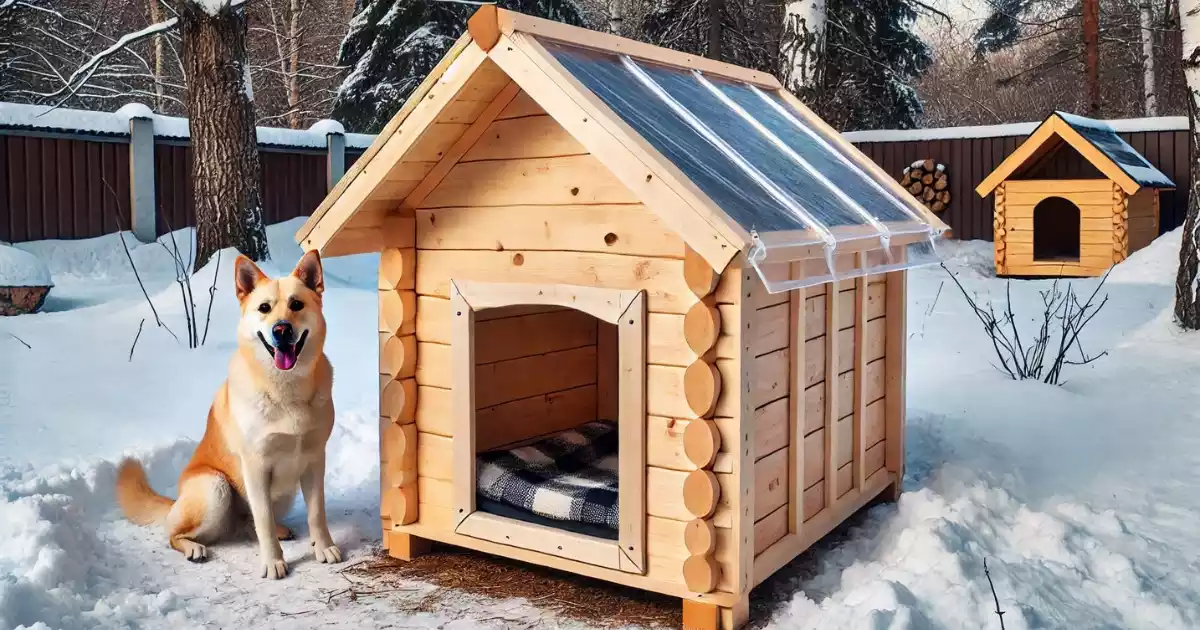
Did you know that insulating a dog house can make your pet much more comfortable in cold weather? A well-insulated wooden dog house can really help keep your pet safe from the cold. This is important because in places like Alaska and North Dakota, it can get as cold as -20 degrees Fahrenheit.
This guide will show you how to make a dog house that keeps your pet warm and safe outside. You’ll learn about the right size, air flow, and insulation. With these steps, your dog’s home will be a cosy spot even in the coldest weather.
Key Takeaways
- Insulation is crucial for preventing cold-related health issues in dogs.
- Proper construction methods enhance the durability of your outdoor dog shelter.
- Choosing the right materials contributes to a comfortable environment.
- A well-insulated dog house can improve your pet’s quality of life.
- Regular maintenance ensures the longevity of your winterised pet house.
Understanding the Importance of Insulation for Your Dog’s Health
Insulation is key to your dog’s health, more so in winter. It keeps them warm and cosy. An insulated dog house prevents illnesses like hypothermia and frostbite, which happen when it’s too cold.
Hypothermia makes dogs shiver and have trouble breathing. It’s a serious issue that can happen if they’re outside too long in the cold.
Benefits of Insulation in Extreme Weather
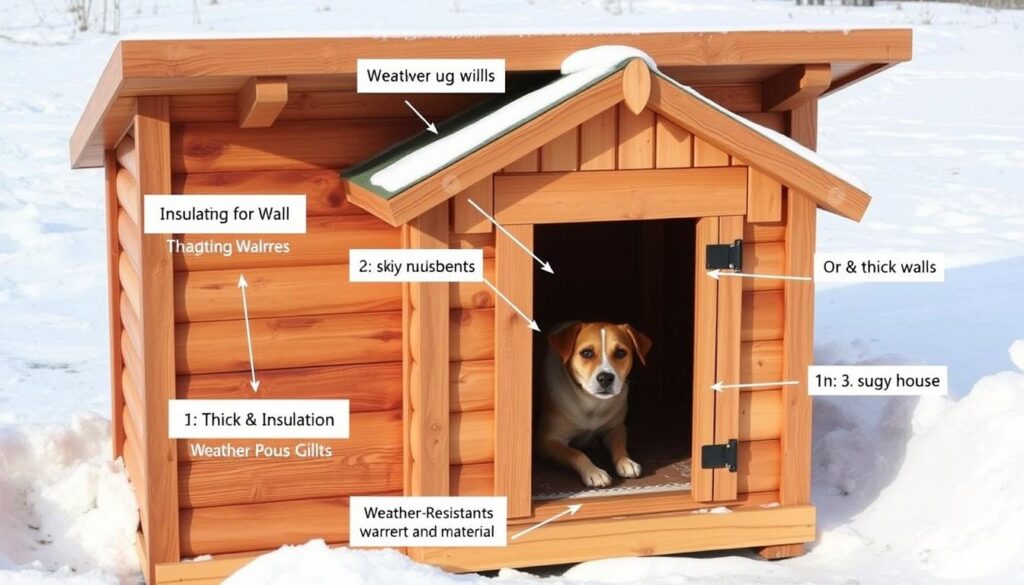
Insulation keeps the dog house warm, even when it’s freezing outside. This is important because dogs can get sick from the cold more easily than people. A warm dog house also makes them less stressed during bad weather.
Consequences of Poor Insulation
A dog house without insulation is too cold for your pet. This can cause frostbite on their ears and tails. Different dogs handle cold differently, but all need a warm place to stay.
Building a well-insulated dog house is smart and saves money. It keeps your dog healthy and happy all winter.
Choosing the Right Materials for Your Wooden Dog House
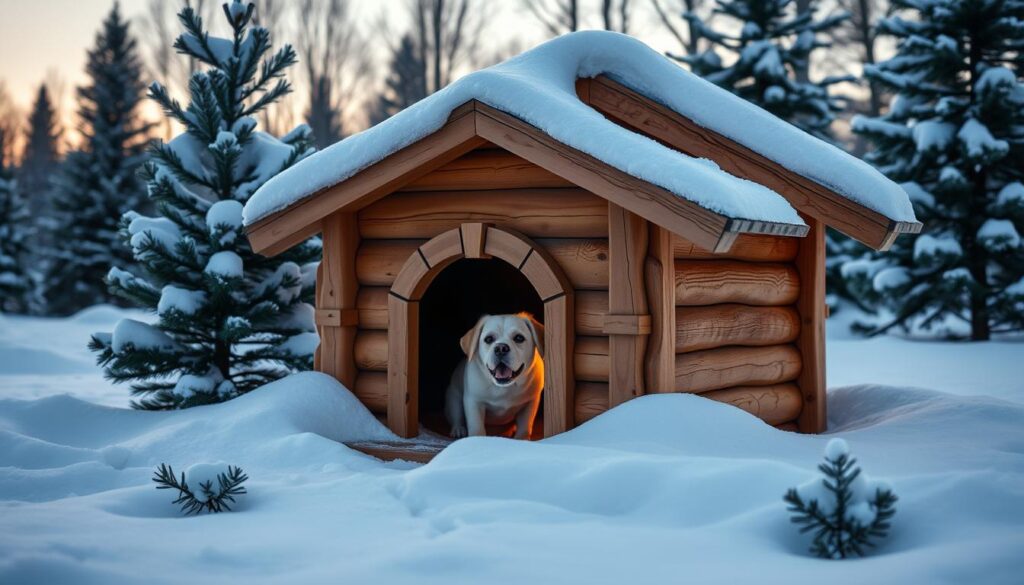
When building an insulated wooden dog house, picking the right materials is key. It ensures your dog’s comfort and safety. Start with durable wood and effective insulation. This combo creates a cosy, safe spot for your pet in any weather.
Durable Wood Types for Outdoor Structures
Wooden dog houses are made of wood because it’s strong. Pressure-treated lumber is best because it fights off moisture and pests. It also keeps dogs warm in cold weather. Cedar and pine are great choices because they’re tough and look good.
Insulation Options: Foam, Wood Chips, and Blankets
Choosing the right insulation options is crucial. Rigid foam panels are efficient and easy to install. They keep your dog warm. Wood chips are eco-friendly and let air in. Blankets add extra warmth inside. The right insulation keeps your dog cosy and dry, no matter the weather.
| Material | Durability | Insulation Effectiveness | Eco-Friendliness |
|---|---|---|---|
| Pressure-Treated Lumber | High | Moderate | Low |
| Cedar | High | Good | Moderate |
| Pine | Medium | Good | Moderate |
| Rigid Foam Panels | High | Excellent | Varies |
| Wood Chips | Low | Good | High |
| Blankets | Medium | Varies | Varies |
By picking the right materials, you make a dog house that’s comfy and lasts all year. It’s important to find a balance between durability and insulation. This way, you get a dog kennel that’s good for your pet and the planet.
Designing Your Insulated Wooden Dog House Outdoor
Building an insulated outdoor dog house needs careful design to keep your dog warm. The size of the dog house is key to keeping heat in and making a cosy space. Here are some tips to make sure your dog is comfortable.
Essential Dimensions Based on Dog Size
The American Humane Society says the dog house should be a bit taller and wider than your dog. For example, if your dog is 24 inches tall and 30 inches long, the house should be about 33 inches high, 48 inches long, and 42 inches wide. This size helps keep your dog’s body heat in.
Creating a Cosy Interior Space
To make the inside of your dog house cosy, add soft bedding and insulation. Rigid foam insulation helps keep the temperature right for your dog on cold nights. Make sure the space feels safe and dry, like with a raised floor. The right design keeps your dog warm and happy outside.
Following these guidelines, you can build a cosy, insulated dog house. This will make your pet’s life better by keeping them warm and comfortable during winter.
Step-by-Step Guide to Building Your Insulated Dog House
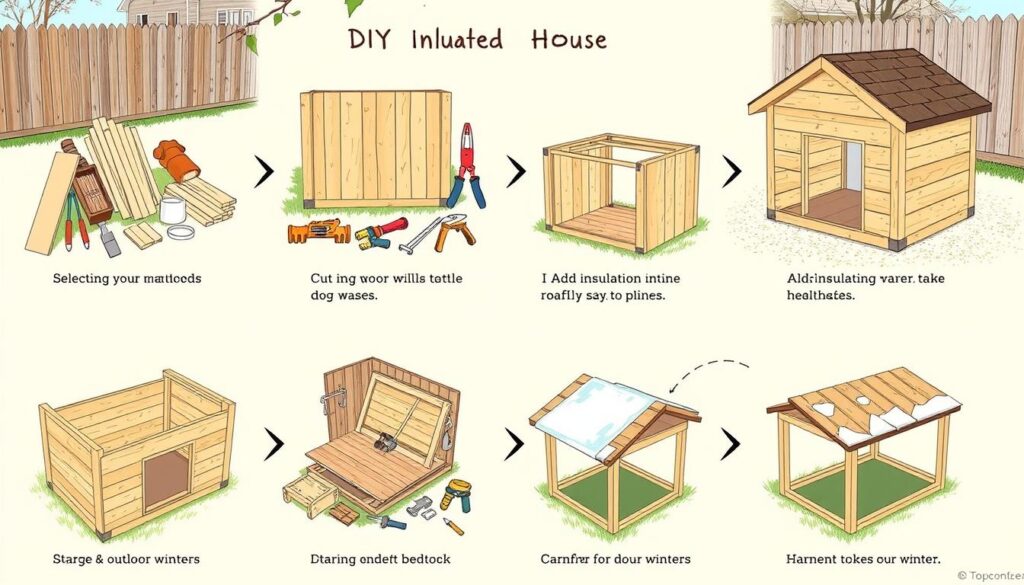
Building a DIY insulated dog house is a great way to keep your pet warm in winter. This guide will help you with the tools and materials you need. It also gives step-by-step instructions for a shelter that can handle the weather.
Required Tools and Materials
First, you need to get your construction materials. Here’s what you’ll need:
- Circular saw
- Mitre saw (optional)
- Drill with a countersinking pilot hole bit
- 1 4×8 sheet of 3/4” plywood
- Eight 2x3x8 pressure-treated lumber
- 2x4s and 2x2s for framing
- 3″ and 1 1/4″ exterior screws
- Insulation panels (1″ and 1/2″)
- Asphalt shingles for roofing
- Water-resistant felt paper
- Heated mat (with GFCI for safety)
- Liquid Nails for secure adhesion
Constructing the Frame and Walls
To start your DIY insulated dog house project, measure and cut the 2x4s. Add 12” to the width and 18” to the length of the house. Assemble the frame with 3″ exterior screws, making sure it’s stable. Then, attach the plywood to the frame with 1 1/4” screws for strength.
Installing the Roof for Maximum Weather Protection
Next, work on the roof. Cut 2x2s for an edge to fit foam insulation. Once built, attach asphalt shingles with 3/4” shingle nails. Make sure the shingles don’t line up to prevent water from getting in. This will keep your dog safe and warm, no matter the weather.
| Material | Size | Usage |
|---|---|---|
| Plywood | 4×8 ft, 3/4” thick | Walls and floor |
| 2x4s | As needed | Frame structure |
| 2x2s | As needed | Roof support |
| Insulation Panels | 1” and 1/2” | Wall insulation |
| Asphalt Shingles | Standard | Roof covering |
| Heated Mat | As needed | Interior warming |
By following these steps, you’ll make a reliable and warm DIY insulated dog house for your pet. Always use treated lumber and seal joints well to avoid moisture problems.
Applying Insulation: The Key to Winter Readiness
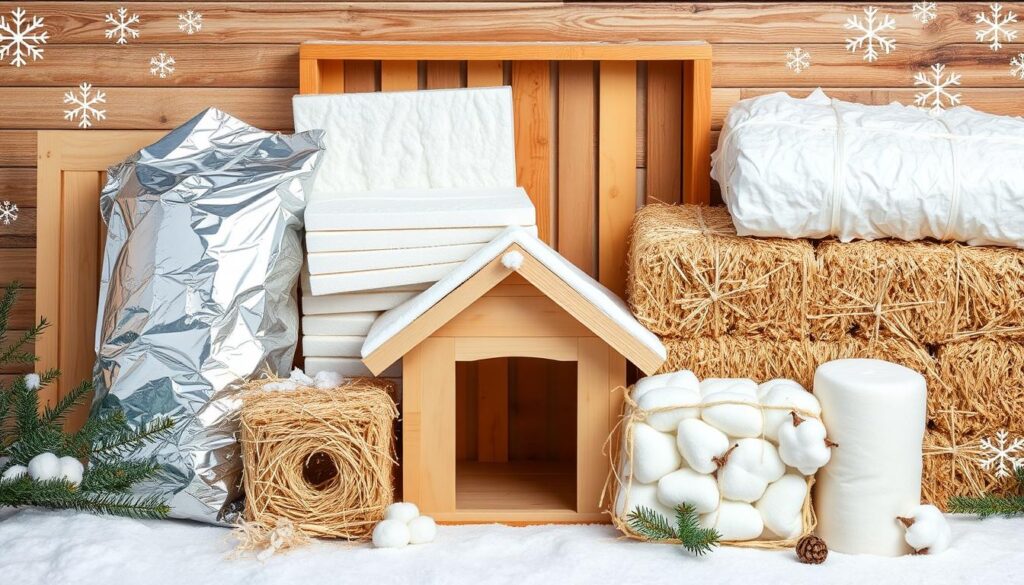
When getting your dog’s house ready for winter, knowing the right types of insulation is key. In places like Ireland, where winters are harsh, you need good insulation to keep your dog warm. Rigid foam insulation is a top pick because it keeps heat in well. You can also use blankets or wood chips for extra warmth and comfort.
Types of Insulation: Which One Is Best?
Choosing the right insulation depends on your needs. Here are some popular ones:
- Rigid Foam Insulation: It’s great for keeping heat in and is often used in DIY dog house projects.
- Wood Chips: They add natural insulation and are easy to replace.
- Blankets: They provide extra warmth and comfort for your dog.
How to Properly Install Insulation in Your Dog House
To properly install insulation, make sure it fits snugly without gaps. Start by cutting plywood panels to fit over the insulation. Use rust-resistant screws to secure it, drilling pilot holes every 10 inches for stability. Adding a hinge to the roof makes cleaning easy, keeping your dog’s home healthy.
Remember, bigger dogs might need less insulation than smaller ones or those with thin coats. Regular grooming helps keep their coat warm. Giving them extra food in winter helps them stay warm and healthy.
Weatherproofing Your DIY Dog House
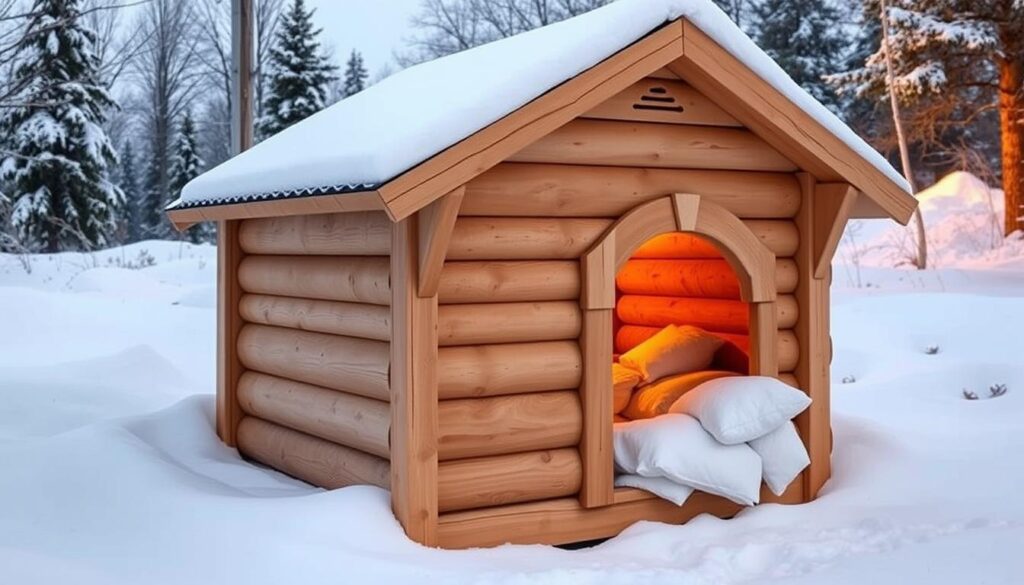
To make your dog house weatherproof, pick the right sealants and paints. Use outdoor-rated sealants to stop moisture damage and make your wood last longer. Choose paints that don’t peel, fade, or get damaged by water. These steps help keep your pet safe and cosy all year.
Selecting the Right Exterior Sealants and Paints
Choose sealants and paints made for the outdoors. Look for ones that resist water and change with the seasons. Marine-grade paints are tough and weather-resistant, perfect for your dog house.
Strategies to Enhance Water Resistance
There are many ways to make your dog house more water-resistant. Here are some tips:
- Employ a slanted roof: This design helps to divert rain and snow away from the dog house, minimising water accumulation.
- Apply caulking to seams: Sealing edges and joints can prevent moisture infiltration, ensuring a dry environment inside.
- Elevate the dog house: By raising the structure slightly off the ground, you reduce the risk of water seeping in during heavy rains.
- Consider drain holes: Small drainage holes at the base of the dog house can help manage excess water that may enter.
Keep up with these tips to keep your dog house safe from bad weather. Using the right materials and techniques, along with regular care, makes a strong shelter. This keeps your dog warm and healthy, avoiding problems like hypothermia and skin infections.
Using Eco-Friendly Options for an Eco-Friendly Dog Kennel
Building an eco-friendly dog kennel helps your pet stay warm and reduces your environmental impact. Using sustainable materials for construction is key. An eco-friendly kennel promotes a healthier lifestyle for your pet and the planet.
Benefits of Sustainable Materials
Sustainable materials are durable and weather-resistant. For example, recycled plastic or local wood cuts down carbon emissions and builds a strong kennel. An eco-friendly kennel is also easy to maintain and lasts long, keeping your dog comfortable all year.
Choosing eco-friendly materials can also protect your dog’s health. Some insulation materials can cause allergies or irritation. Natural materials like straw offer green insulation solutions, keeping your dog warm and happy in cold weather.
DIY Approaches for Eco-Friendly Insulation
DIY insulation can use organic materials like straw and recycled clothing. These materials are great for keeping your dog’s house warm while allowing air to circulate. This is important when nighttime temperatures drop low.
Also, an eco-friendly kennel might have special features like heavy-duty vinyl flap doors. These doors keep warmth in and block cold winds. Such features show the importance of comfort and sustainability in building your doghouse.
Choosing eco-friendly options benefits your dog and helps protect the environment for the future. Look into sustainable materials and green insulation solutions to create a cosy, ethical home for your pet.
Maintaining Your Insulated Dog House Throughout Winter
To keep your insulated wooden dog house in top shape during winter, regular maintenance is key. You should set up a routine for checking and cleaning to avoid mould and bacteria. Knowing when to fix things helps keep your pet safe and warm all winter.
Regular Inspections and Cleaning Tips
Regular checks on your dog house help spot any repairs needed. Here are some tips to keep your dog house insulated:
- Check the insulation for damage or wear.
- Clean the inside often to stop dirt and bacteria.
- Make sure the roof is solid and leak-free.
- Look for drafts and seal any gaps.
- Keep the dog house off the ground to avoid moisture.
Signs of Wear and When to Repair
Spotting wear signs early is key to quick repairs. Look out for these signs:
- Visible rotting wood or decaying materials.
- Loose or missing insulation can loss of warmth.
- Pests or insects inside the dog house.
- Signs of water damage, like stains or mould.
If you see these signs, fix your dog house right away. In cold places, dog houses need extra insulation and heaters to keep pets warm. A well-maintained dog kennel keeps pets comfortable in freezing weather. Regular care makes a cosy winter spot for your pet. By focusing on upkeep, you ensure your dog’s home stays safe and welcoming all winter.
Give Your Furry Friend the Perfect Winter Home!
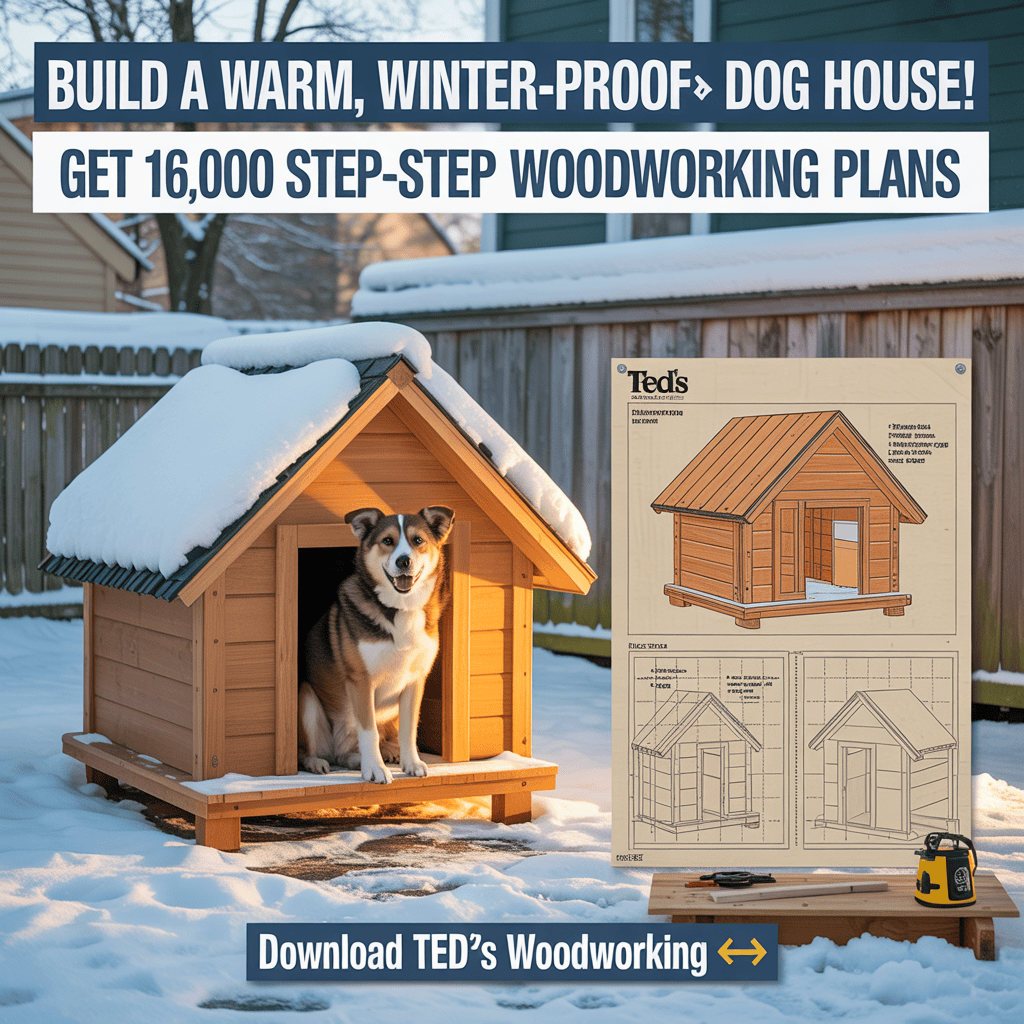
Want to build a professional-grade insulated dog house, but not sure where to start? Stop guessing and start building with confidence!
🏠 Discover TedsWoodworking’s Professional Dog House Plans & More!
Get instant access to 16,000 detailed woodworking plans, including multiple premium dog house designs, featuring:
- Step-by-step instructions for perfect results
- Detailed materials lists and cutting guides
- Clear, colored schematics for every angle
- Beginner-friendly instructions
Limited-Time Offer: Get All 16,000+ Plans for Only $67! (Regular price: $297 – Save 77% Today!)
Start Building Your Professional Dog House Today! >>
BONUS: Includes CAD Viewer, 150 Premium Videos, and Complete Woodworking Guides ($190 value – FREE!)
Yes! I Want Access to Professional Plans >>
60-Day Money-Back Guarantee – Love it or get a full refund!
Conclusion
Building an insulated wooden dog house outdoors is key to your pet’s comfort and health, mainly in cold winter months. Use top-notch materials like cedar for its durability. This ensures a safe spot that keeps out the cold and harsh weather.
Designing with care is crucial. It helps regulate temperature and protects from wind, rain, snow, and drafts.
Keeping the insulated structure in good shape is also important. Regular checks and quick fixes help it last longer. Also, think about where you place it. Choose a spot that gets sunlight but not too much wind.
In the end, a well-made and cared-for insulated wooden dog house is great for your dog. It’s a way to show you care about their health and happiness. It makes a warm spot for them when it’s cold.
FAQ
Why is insulation important for my dog’s health during winter?
Insulation keeps your dog warm in cold weather. It protects them from getting too cold. A well-insulated dog house makes your pet comfortable and safe.
What are the benefits of using an insulated wooden dog house outdoors?
An insulated wooden dog house keeps your pet warm in winter. It also lasts long against different weather. This makes your dog’s life better during cold seasons.
What materials are best for building an insulated outdoor dog house?
Use pressure-treated lumber for the structure. For insulation, rigid foam panels or wood chips are good. These keep your pet warm and comfortable.
How can I design a cosy interior for my insulated outdoor dog house?
Make sure the dog house is the right size. It should be 9 inches taller and 18 inches longer than your pet. Use blankets or wood chips for bedding to make it cosy.
What steps are involved in building a DIY insulated dog house?
First, get the tools and materials you need. This includes plywood, screws, and insulation panels. Follow the instructions to build the frame and walls. Then, put on a weatherproof roof to keep your dog house safe.
What types of insulation are suitable for my insulated dog house?
Rigid foam insulation keeps it warm. You can also use blankets or wood chips for comfort. Make sure it fits well to keep your pet warm.
How can I weatherproof my insulated dog house?
Use outdoor paints and sealants to protect the wood. Add slanted roofs and caulk seams to keep water out. This makes your dog house a safe place from the weather.
What are the eco-friendly options when building a dog kennel?
Use recycled wood and organic insulation like straw. These choices are good for the environment. They also keep your dog warm and cosy.
How should I maintain my insulated wooden dog house during winter?
Check it often and clean it to avoid mould and bacteria. Look for damage like rotting wood or loose insulation. Fix or replace it quickly to keep your pet warm and safe.